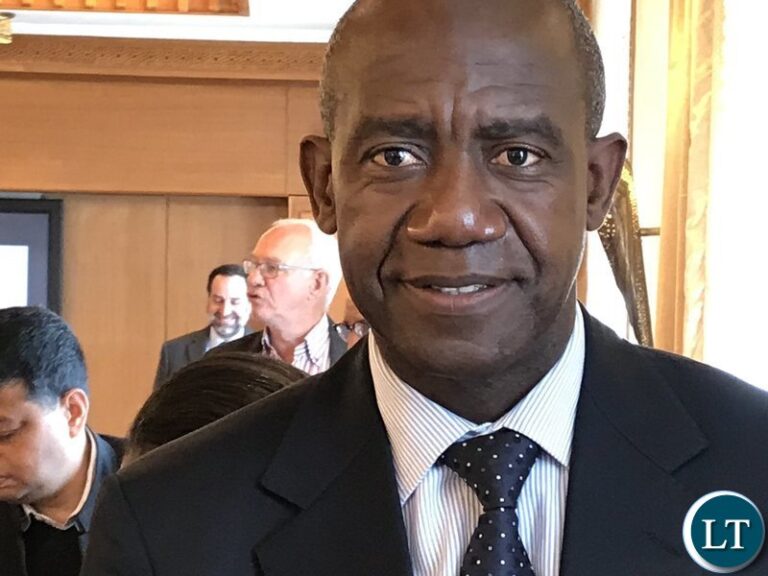
Government has launched the 2027–2029 Medium Term Budget plan for the Ministry of Health, with a focus on increasing access to medicines, investing in health workers and digitalising health systems as part of its efforts to strengthen healthcare delivery and achieve universal health coverage.
Ministry of Health Permanent Secretary for Administration Joma Simuyi says the planning process is aligned with the five thematic pillars of Zambia’s National Health Compact 2026–2030, which seeks to accelerate progress towards universal health coverage and build resilient health systems.
Speaking during the launch of the National Planning Meeting for the 2027–2029 Medium Term Budget for the Ministry of Health, Ms Simuyi said government has recorded significant achievements under the 2022–2026 National Health Strategic Plan.
She said Zambia has made notable progress in maternal and child health services, malaria prevention, HIV treatment and tuberculosis management.
Ms Simuyi disclosed that Zambia has surpassed global HIV targets, with 97.5 percent of people living with HIV knowing their status, 99.5 percent of those diagnosed receiving treatment and 97.4 percent achieving viral suppression.
She added that government remains committed to combating malaria and distributed more than 11.4 million insecticide-treated mosquito nets in 2024, with an additional 1.2 million nets distributed through antenatal and immunisation programmes in 2025.
Ms Simuyi further said Zambia has strengthened public health security measures in response to disease outbreaks such as cholera, measles, anthrax, rabies, Mpox, typhoid and polio.
On health sector financing, she revealed that government increased the budget allocation for medicines and medical supplies from K4.6 billion in 2023 to K6.4 billion in 2026.
She said the country has maintained 100 percent availability of vaccines, antiretroviral drugs, anti-tuberculosis medicines and malaria commodities.
Ms Simuyi also highlighted progress in addressing human resource challenges, stating that government recruited 4,216 health workers in 2024 and a further 3,205 in 2026.
She noted that infrastructure development remains a key priority, citing the completion of 111 mini-hospitals and continued construction of district hospitals, health centres and specialised treatment facilities across the country.
She disclosed that preparations for the 2027–2031 National Health Strategic Plan have already commenced, with the formation of a technical team, development of a concept note and identification of priority focus areas completed.
She called on cooperating partners, civil society organisations, the private sector and other stakeholders to continue supporting government’s efforts towards strengthening the health sector.
Ms Simuyi urged stakeholders to embrace the principle of “One Plan, One Budget and One Monitoring and Evaluation Framework” to ensure effective implementation of health programmes.
Meanwhile, Health Cooperating Partners Group Chairperson and United Nations Population Fund Deputy Country Representative Anna Holmstrom said Zambia’s next health sector planning cycle should prioritise strengthening healthcare infrastructure, disease surveillance and domestic financing.
Ms Holmstrom described climate change as a public health emergency and called for increased investment in water, sanitation and hygiene infrastructure to ensure uninterrupted health services during disasters such as El Nino – induced droughts and floods.
She further urged government to include dedicated contingency funding for disease surveillance and emergency response to strengthen preparedness against outbreaks such as Mpox and Ebola.
Ms Holmstrom also called for accelerated utilisation of the National Health Insurance Management Authority to support sustainable domestic health financing and reduce out-of-pocket healthcare costs.
She commended government for increasing the health sector budget from K23.17 billion in 2025 to K26.2 billion in 2026 and for raising funding for essential medicines and medical supplies from K4.9 billion to K6.4 billion.
Ms Holmstrom also commended government for the investment in health infrastructure, including the construction and commissioning of 111 mini-hospitals and 36 health posts, as well as progress on the Ndola Cancer Diseases Hospital, which has reached 85 percent completion.
However, she observed that challenges remain in the procurement, storage and distribution of medicines, resulting in periodic shortages at some health facilities.
She called for greater investment in integrated digital health systems and improved public financial management to enhance service delivery.
Ms Holmstrom reaffirmed the commitment of cooperating partners to continue supporting government’s efforts to achieve Universal Health Coverage and improve health outcomes for all Zambians.