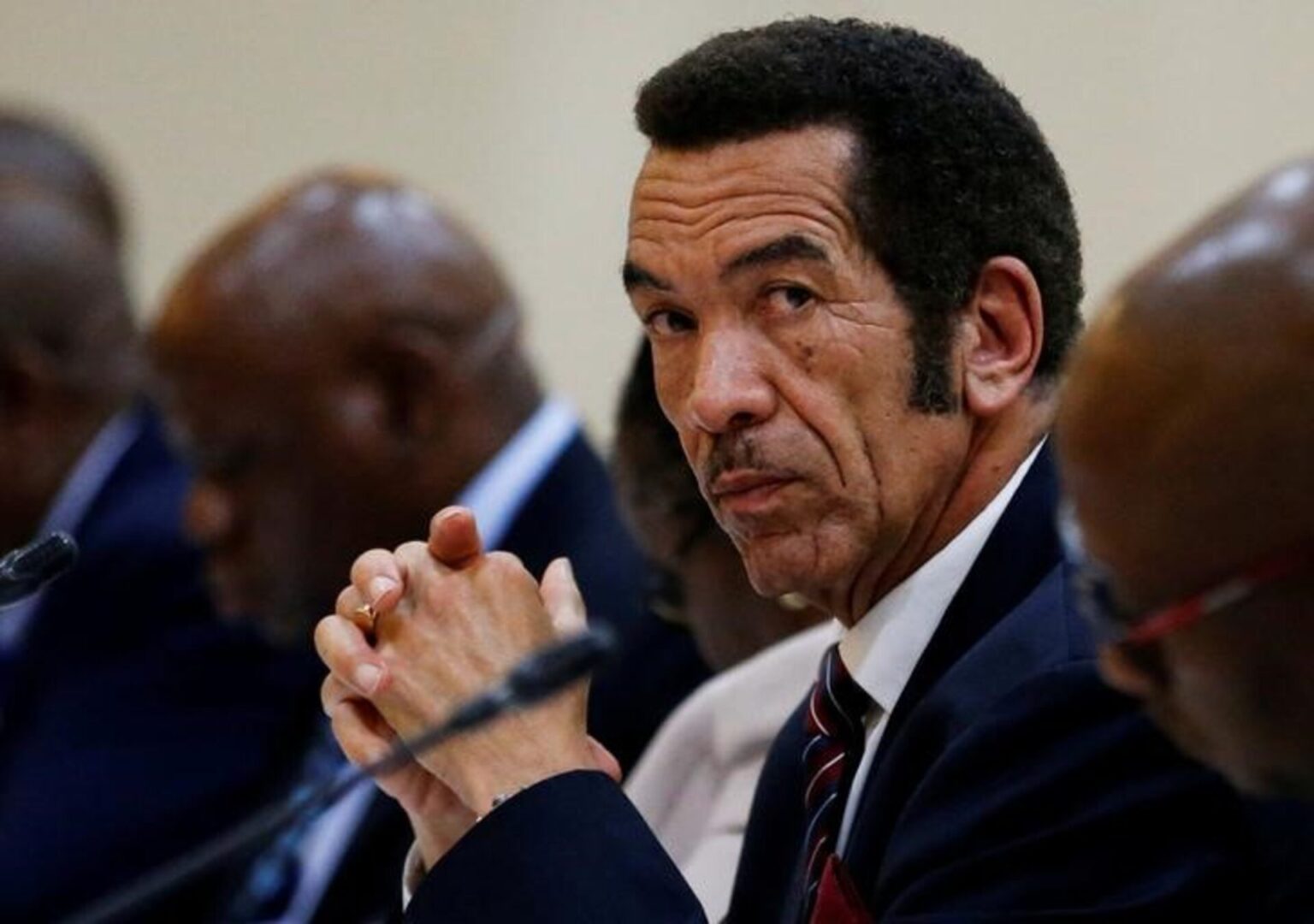
Political leaders and governance stakeholders have mounted a strong defence of President Hakainde Hichilema against remarks attributed to former Botswana President Ian Khama. They describe the remarks as careless and unfounded. The backlash follows comments Mr Khama allegedly made in a recent radio interview, in which he described President Hichilema in an undiplomatic manner. Government officials and other stakeholders have challenged the former Botswana leader to retract his remarks and apologise. The row has drawn in members of Parliament, governance experts and human rights voices.
Member of Parliament Judith Kabemba has called on Mr Khama to withdraw his remarks and offer an unreserved apology to President Hichilema and the people of Zambia. Ms Kabemba described the statements as unfortunate, reckless and unbecoming of a former head of state. She said leaders of Mr Khama’s standing are expected to champion diplomacy, statesmanship and respect for democratic institutions. She said comments of this kind undermine the dignity expected of those who have held the highest office in their countries. Her call was among the strongest from Zambia’s political establishment.
Ms Kabemba said President Hichilema’s political career has been defined by respect for constitutional processes and democratic principles. She pointed to his decision to pursue power through successive elections and by lawful means. He contested several general elections before winning the presidency in 2021. He was re-elected in the August 2026 general election. Ms Kabemba said that record directly contradicts the picture painted by Mr Khama.
“Unlike the characterisation being advanced against our President, Mr Hichilema has consistently demonstrated his commitment to patriotism, democracy and constitutionalism,” Ms Kabemba said.
Governance expert and human rights advocate Wesley Miyanda has also condemned the remarks. He described them as unfortunate, misplaced and harmful to the strong political, social and economic ties Zambia and Botswana have enjoyed for many years. Mr Miyanda said Zambia has earned international recognition as one of Africa’s most peaceful and stable democracies. He said the country has an enviable record of conducting credible elections and facilitating peaceful transfers of power. He said that record should command respect from leaders across the region.
Livingstone MP Mr Mayangwa said Mr Khama should reflect on his own governance record before attacking President Hichilema. He described President Hichilema as a democratically elected leader whose administration is focused on economic recovery. He said the Government has worked to restore investor confidence and create opportunities for national development. He said the President’s record should be judged on those results. He said it should not be judged by commentary from outside the country.
Mr Khama served as President of Botswana from 2008 to 2018. Since leaving office, he has been an outspoken commentator on politics in Botswana and the wider region. Zambia and Botswana share one of the shortest borders in the world at Kazungula, where the two countries jointly built the Kazungula Bridge across the Zambezi River. The bridge has become a symbol of regional cooperation and a key link for trade between Southern African countries. Relations between Lusaka and Gaborone have generally been warm and cooperative.
Neither the Government of Botswana nor Mr Khama had publicly responded to the calls for an apology at the time of writing. The remarks appear to have been made in a personal capacity rather than as a statement of Botswana’s official position. That distinction matters for diplomatic relations between the two countries. Still, criticism from a former head of state carries weight across the region. The strength of the reaction in Zambia shows how seriously the remarks have been taken.
For President Hichilema’s supporters, the episode is a chance to restate the democratic credentials that underpin his administration. For the region, it is a reminder that former leaders’ words can strain relations between neighbours. Zambia’s leaders have made their position clear: they want the remarks withdrawn and an apology issued. Whether Mr Khama responds will decide whether the row fades or deepens.